
VBTech / Industrial software
Digital twins for oil & gas, from EPC handover to operations
An industrial digital twin connects every tag of a plant to its engineering data, its documents and its place in the 3D model. Most of that information is created by the EPC, so the twin is decided at handover. We build the applications that keep it connected and usable.
Track record · In progress: an LNG plant digital twin for a national oil company in the UAE, connecting engineering data, documents and the 3D model.
Discuss your digital twin project
For EPC contractors, industrial operators and integration partners · Dubai, UAE
Technologies 

One tag, every piece of information
Engineering data, documents and the 3D object of each tag, reached from any one of them.
A handover the operator can use
A tag register, linked documents and an identified model, checked before each delivery.
Applications around your teams
Construction reviews, document access, model viewing and questions in plain language, on the platform you already use.
01
What an industrial digital twin is in oil & gas
An industrial digital twin is the connected record of a plant: every tag, its engineering data, its documents and its place in the 3D model, kept consistent from design through construction to operations. The 3D model is the part people see. The value sits in the connections behind it.
On an oil & gas project, those connections are built by many parties. The EPC contractor produces most of the engineering information. Vendors deliver datasheets and manuals. Construction teams add progress, inspections and as-built changes. The operator inherits all of it at handover and has to run the plant with it for decades.
A digital twin is useful when a person can start from any of those pieces and reach the others. An operations engineer selects a pump in the model and finds its datasheet, its P&ID, its maintenance history and its current status. A document controller opens a vendor document and sees which tags it describes. Without those links, the same information exists, but in separate systems that nobody can navigate as one.
02
Why the handover decides the digital twin
Most of the information an operator needs is created before first oil or first gas. If the EPC delivers it as a set of documents, the operator receives the content without the structure: files that describe tags, rather than tags that point to their files. Rebuilding that structure after handover is slow and costly, and it is often done only in part.
A digital handover changes what is delivered. Instead of a document archive, the EPC hands over a dataset: a tag register with classes and attributes, documents linked to the tags they describe, and a 3D model whose objects carry the same identifiers. The operator can load it into its own systems and work with it on day one.
This is why the digital twin is a project requirement, not an operations project that starts after commissioning. The decisions that make it possible are taken early: which identifiers are used, which attributes are mandatory, which formats are delivered and who checks the data before it is accepted.
03
What the operator should require from the EPC
An owner-operator does not need to specify the software the EPC uses. It needs to specify the information it expects to receive, in a form it can check. The requirements usually cover five points:
- A tag register with a shared class library. Every functional and physical tag, its class and the attributes that class requires. Specifications such as CFIHOS, maintained by IOGP, give a common vocabulary for this.
- Documents linked to tags. Each datasheet, drawing and manual declares the tags it describes, so the link survives the transfer.
- A 3D model with identified objects. Model objects carry the tag numbers of the register, in an exchange format such as IFC, so the model can be connected to the data rather than viewed beside it.
- Quality rules and acceptance checks. Completeness of mandatory attributes, consistency between register, documents and model, and a defined review before each delivery.
- A delivery schedule. Information handed over progressively during the project, not in one batch at the end, so problems are found while the people who can fix them are still on the project.
These requirements are simple to state and demanding to deliver. Their benefit is that both sides know, early, what a complete handover looks like.
04
Data, documents and model: the three layers to connect
A digital twin for oil & gas combines three layers of information. Each has its own systems, owners and formats. The tag number is what ties them together.
- Engineering data. Tags, classes, attributes and relationships: which line connects which equipment, which instrument belongs to which loop. This layer is usually managed in an engineering information platform.
- Documents. P&IDs, datasheets, vendor manuals, inspection records. On Gulf projects they often arrive in several languages, and a document only helps the team that can read it.
- The 3D model, and its 4D view. The plant geometry, exported from design tools and prepared for the people who need it. Linked to the schedule, the same model shows construction progress by date.
Connecting the layers is mostly integration work: making sure that the identifiers match, that relationships survive each conversion, and that every value shown to a user can be traced to its source.
05
Where Hexagon SDx fits
Many EPC contractors and operators manage their engineering information in Hexagon SDx (now Octave InConcert Core). SDx holds the tags, documents and their relationships, and its Web Client is where many project teams already work.
A digital twin built on SDx does not need a separate platform. It needs applications around the tasks teams perform with that information. This is the work we do: extensions inside the SDx Web Client, a browser 3D viewer that opens the SDx record of any object, document workflows such as technical translation, and dashboards that place progress and risks on the plant model.
The same approach applies to other platforms. What matters is a clear source for each piece of information and a defined way for applications to read it.
06
From construction to operations: what the twin is used for
A digital twin earns its place through specific uses. On oil & gas projects, the most common are:
- Construction progress on the model. Delivery status, installation progress and open risks shown on the plant objects they concern, and reviewed by date in a 4D timeline.
- Documents teams can read. Technical documents translated between Japanese, Arabic and English, still linked to their tags. How technical document translation works in SDx.
- Models in a browser. IFC models converted to GLB for a web viewer, without losing the identifiers that connect each object to its data. From IFC to GLB: a three.js viewer for SDx.
- Questions in plain language. An assistant that answers questions about tags, documents and values, indexes P&IDs and opens each answer in the 3D model.
- Site events placed on the asset. Alerts from industrial Computer Vision or sensors located on the affected equipment, with its engineering information next to the event.
- Design reviews together. Teams walk the model in shared sessions to run QA reviews before handover.
07
How to start: check your handover readiness
A digital twin initiative does not start with a platform choice. It starts with a few questions about the information you already have, or will receive:
- Is there a single tag register, and do the documents and the 3D model use the same tag numbers?
- Which attributes are mandatory for each class of equipment, and who checks them?
- In which format will the 3D model be delivered, and do its objects carry tag identifiers?
- Which documents must be readable in which languages, and by which teams?
- Which decision should the first application support: a construction review, a handover check, a maintenance task?
The answers define a first workflow that can be built, tested with its users and extended. This is how we work: one useful workflow on your data, then the next one.
08
Our digital twin work in the Gulf
VBTech is an industrial software company based in Dubai. We are currently delivering an LNG plant digital twin for a national oil company in the UAE, connecting engineering data, documents and the 3D model for the project teams.
We work as the application layer of the project: the EPC, the operator or the integration partner keeps responsibility for its platforms and data, and we build and integrate the applications their teams use. The first discussion defines that division of work and how the result will be accepted.
The services behind the digital twin.
Engineering information, and what happens on site.
-
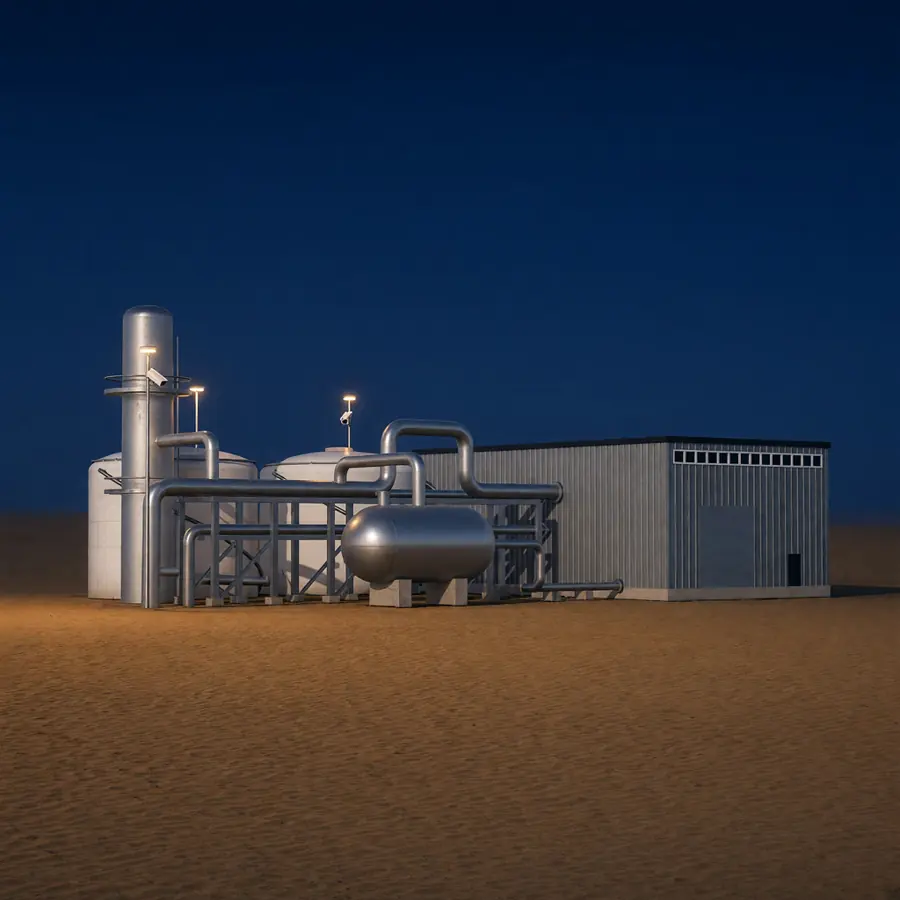
Hexagon SDx integration
Extensions inside the SDx Web Client: a 3D viewer connected to each record, document translation, progress dashboards and a 4D timeline.
Explore our SDx integration services -
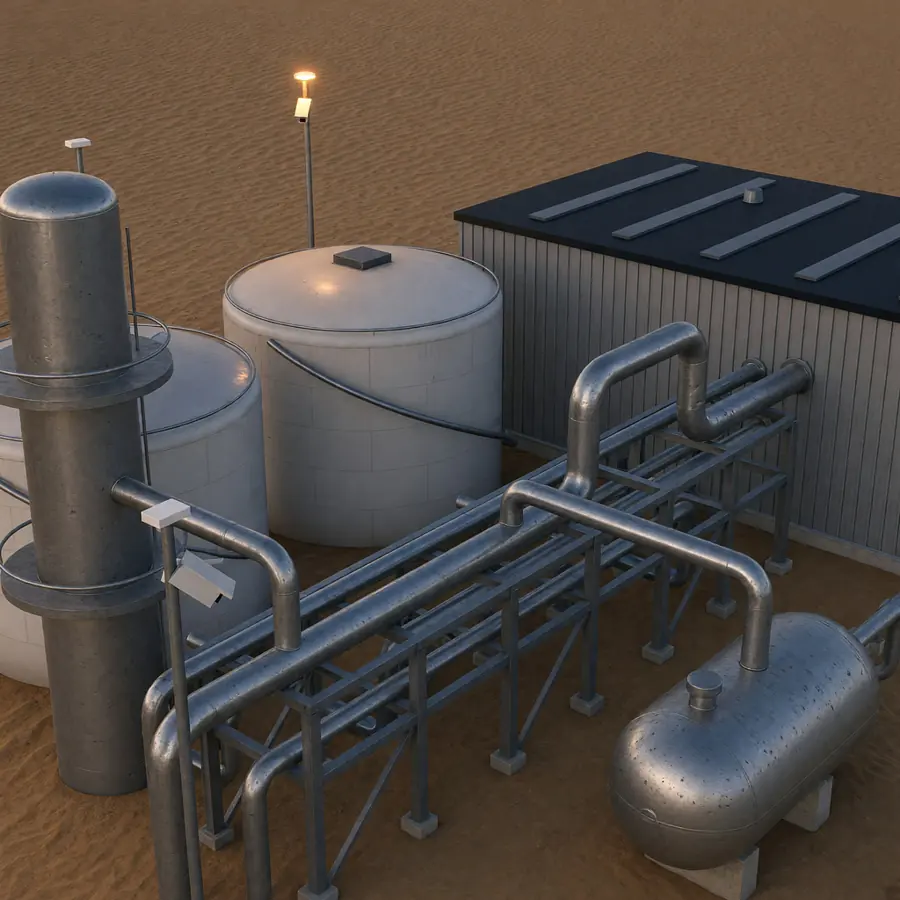
Computer Vision & video analytics
Turn site cameras into HSE alerts, and place each event on the equipment it concerns.
Explore Computer Vision services
From the blog
Field notes and technical articles on this work
| Article | What you will find | Category | Technologies | |
|---|---|---|---|---|
From IFC to GLB: A three.js Viewer for SDx Digital Twin WorkflowsFlorian Ronzi · · 15 min read |
Design an IFC-to-GLB pipeline for SDx digital twin workflows: object mapping, three.js rendering, coordinates, permissions and 4D data integration. | Digital twins & SDx |
|
Read “From IFC to GLB: A three.js Viewer for SDx Digital Twin Workflows” → |
Technical document translation in SDx: from PDF to usable engineering informationFlorian Ronzi · · 9 min read |
Technical document translation in all languages, integrated with SDx: OCR, readable PDFs, review and asset context. Custom workflows by VBTech. | Digital twins & SDx | 
|
Read “Technical document translation in SDx: from PDF to usable engineering information” → |
Questions about digital twins
What is the difference between a 3D model and a digital twin?
A 3D model shows the geometry of a plant. A digital twin connects that geometry to the engineering data, documents and status of each tag, so a user can start from an object and reach everything known about it. The connection relies on shared identifiers between the model, the tag register and the documents.
What is a digital handover?
A digital handover delivers the plant information as structured data rather than a document archive: a tag register with classes and attributes, documents linked to their tags and a model whose objects carry the same identifiers. The operator can load it into its own systems and check it against agreed quality rules.
Do we need CFIHOS?
CFIHOS, maintained by IOGP, gives EPCs and operators a common class library and set of handover requirements. Using it is a decision for the operator and the project. What every project needs is an agreed definition of the tags, attributes and documents to deliver, whichever specification it is based on.
Do we need Hexagon SDx to build a digital twin?
No. Many EPCs and operators already manage their engineering information in SDx, and we build extensions inside its Web Client. The same approach works with another platform, as long as each piece of information has a defined source and an interface the applications can read.
Can we start without sharing confidential models or documents?
Yes. The first discussion can use a generic description of the workflow and the systems involved. We then agree what representative or anonymized material is needed for the technical assessment and how it will be handled.
Let’s discuss your project
Connect your operational needs to a software solution built around your team.
Start with your use case. Tell us what your teams need to do and which systems are involved.
Discuss your digital twin projectLet’s build what comes next
Your next industrial advantage starts here.
Tell us about your site, your platform or the workflow you want to improve. We’ll help you identify the right starting point.
Or email us at [email protected]